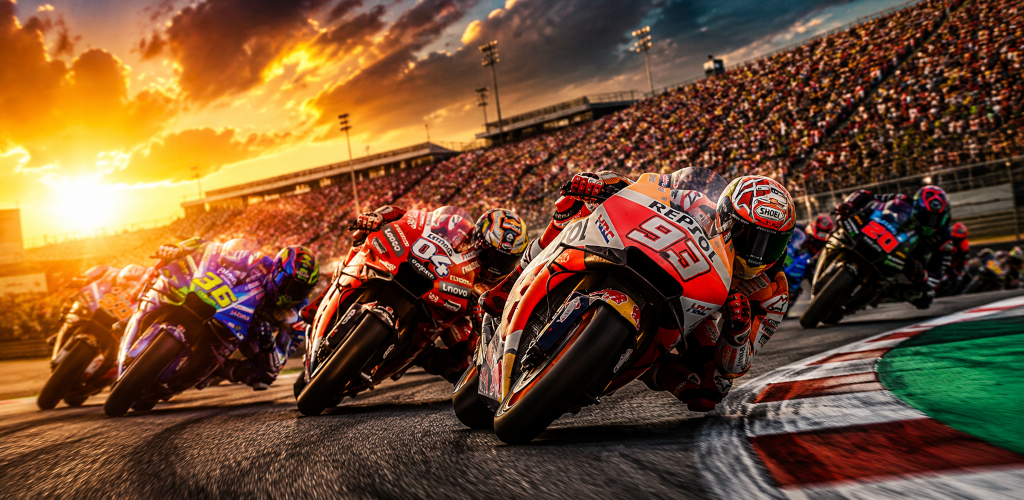
Are there any motorsport fans who would like to use their Associative Remote Viewing skills for motorsport betting?
Associative Remote Viewing for Motorsports Betting
Associative Remote Viewing or ARV is a method of remote viewing that’s used to forecast the future outcomes of sporting events and financial markets.
It sounds almost too good to be true, doesn’t it? If the practitioners could reliably predict the future, they’d all be millionaires.
The thing is… nobody can predict the future with perfect accuracy. The future appears to be flexible rather than fixed.
According to MPI theory pragmatic information only has meaning within the structure and constraints of a system. In other words, you might correctly sense that it’s probably going to rain, but you can’t produce a perfectly accurate map showing exactly where every raindrop will land.
That’s why experienced ARV practitioners usually talk about gaining a statistical edge — perhaps 60–80% accuracy under good conditions. Sometimes that’s enough, isn’t it?
To make this clearer, here’s an ARV-like prediction tool that Reddit users recommend for practice. Everything is ready there. You can start creating a prediction using their MatchCast trainer right away. It doesn’t have to be an app, but you’ll need a partner to set everything up, since the core idea is that the viewer works completely blind. If you want to know more, here’s what a session looks like. We can go through it together if you’re interested.
Associative Remote Viewing: What Does It Look Like?

If you’re wondering whether an ordinary person can do this, the answer is yes.
So, in a typical ARV session, the viewer works completely blind. They’re given nothing more than a target ID and asked to describe one of several possible target images without knowing what any of them are.
Only after the real-world outcome is known do they discover which image was actually assigned to the correct result.
For example:
- Tomorrow’s MotoGP race at Mugello
- If Francesco Bagnaia wins → describe Image A
- If Marc Márquez wins → describe Image B
- If the race ends in a draw or dead heat → describe Image C
- If the race is canceled → describe Image D
The viewer has no knowledge of the contents of Images A, B, C, or D or the outcomes linked to them during the session. They simply describe what they perceive, and the image determines the predicted outcome. After the session, they get the prediction. When the event is over, they receive feedback with the correct image.
This is a simplified overview. In reality, it’s more complex. It’s not about guessing — you need to train your perception first. At basic levels, it can start with improving your hit rate beyond chance, such as distinguishing “hot or cold,” “solid or liquid,” or similar simple exercises. It’s also advisable to learn how to calm your mind before any practice.
Most bettors just go to ARV practitioners and use their predictions. But if you don’t want to rely on the community, you can do the whole process yourself with the app. It’s pretty convenient.
If It Works, Why Isn’t Everyone Using It?
The process requires careful execution, trained viewers, target pool, blind judging, and discipline. That makes it difficult to automate and scale — so mainstream sports analysts generally rely on conventional statistical models instead. As a result, ARV remains experimental and is mainly practiced within a small research community.
Other Strategies Behind Motorsports Betting
Different people use different strategies. We’re not here to tell you how to bet or which approach is best — we simply want to give you a sneak peek at some of the ways people try to predict race results. So, some common strategies are:
- Driver form – A driver on a winning streak is often more likely to perform well again.
- Track history – Some drivers consistently do better on certain tracks because they match their driving style. Previous results at the same circuit can be a useful clue.
- Team performance – In series like Formula 1, the car matters as much as the driver. Strong teams usually produce more consistent results.
- Qualifying results – Starting near the front of the grid often gives a better chance of finishing in a top position, especially on tracks where overtaking is difficult.
- Weather conditions – Rain can completely change a race. Some drivers perform much better in wet conditions, while others struggle.
- Car reliability – Even the fastest driver can’t win if the car breaks down. Bettors often consider how reliable a team’s cars have been throughout the season.
- Race strategy – Pit stops, tire choices, fuel management, and safety cars can all influence the final result. Experienced teams often make better strategic decisions.
At the end of the day, this is meant to be fun. Keep your expectations realistic and enjoy it as a unique experience.